


Sports Academy Finances: Measure Data, Not Just Sales
More sales don’t always mean more profit. Mateusz Przybysz shows how to measure your sports academy’s finances and ask an AI assistant for decisions.

Expert articles, pro tips and guides for parents of young athletes.
Foundation reports and studies to download (in Polish).

More sales don’t always mean more profit. Mateusz Przybysz shows how to measure your sports academy’s finances and ask an AI assistant for decisions.

10 awareness days with ready-made CSR ideas for youth sports academies, from mental health to tolerance. No big budget needed, just a plan.

Don’t ask ChatGPT how to use AI in your organisation. Ask yourself 3 questions first. AI engineer Mateusz Przybysz shows how to pick processes worth automating.

Before you apply for public funding, check your club’s grant readiness: needs, project, paperwork, people, budget and reporting. A 10-question self-check.

When is changing clubs the right move for your child, and when is it running away? Rafał Warchoł explains the warning signs and where to start.

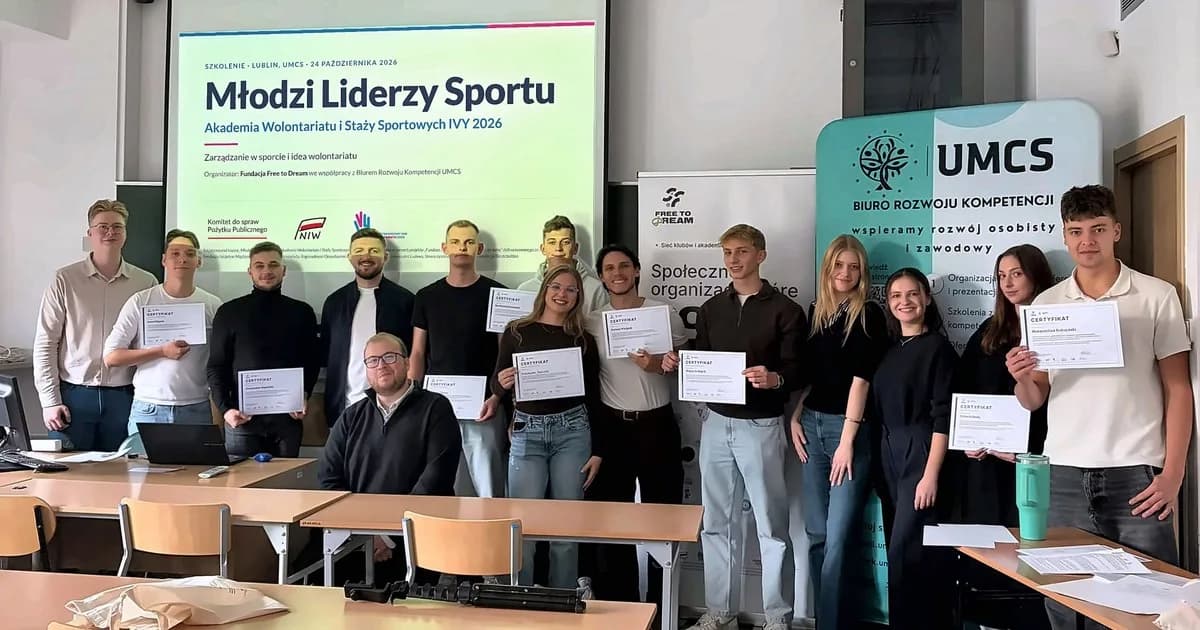
15 participants, one day at UMCS and a plan for November: young volunteers will start working with academies in our network. Here is how the first training in the Free to Dream Foundation’s first project went.

Growing an academy doesn’t have to mean big budgets or a revolution. Rafał Warchoł shares three simple tools: collecting parent feedback, testing your messaging and a goal-based incentive scheme for coaches. You can put each of them into practice this month.

More applications don't mean more funding. Mateusz Boczyło explains why you should only go for grant calls that genuinely fit your academy, and how to check that before you start writing.

A sore calf, a strained groin, another break from training: if this sounds familiar, the cause is not always bad luck or too little stretching. Breathing coach Michał Borowiec explains how breathing affects a young player’s stability, fatigue and recovery, and which warning signs parents should look out for.

Instagram, notifications, a “quick check” and suddenly hours have gone by. Mental coach Przemysław Świercz shows how to use your phone mindfully and where to start a digital detox to regain focus and mental balance.

“Sorry, we don’t have a budget for donations.” If you’ve heard that before, it’s time to change the rules of the game. Instead of asking for support, build a Business Club: a community of local firms that gives your academy stable funding and gives sponsors real value.

You know your offer inside out, but a parent sees it for the first time. Rafał Warchoł shares two simple tests that let you look at your academy's enrollment process through your client's eyes. Sometimes one small fix is all it takes.

A single match can burn over 1,000 kcal, yet many players still don’t eat enough carbohydrates. Sports nutritionist Bartłomiej Dorożyński explains how much energy, protein and carbohydrate a footballer needs, and why it shows in how far they run in the second half.

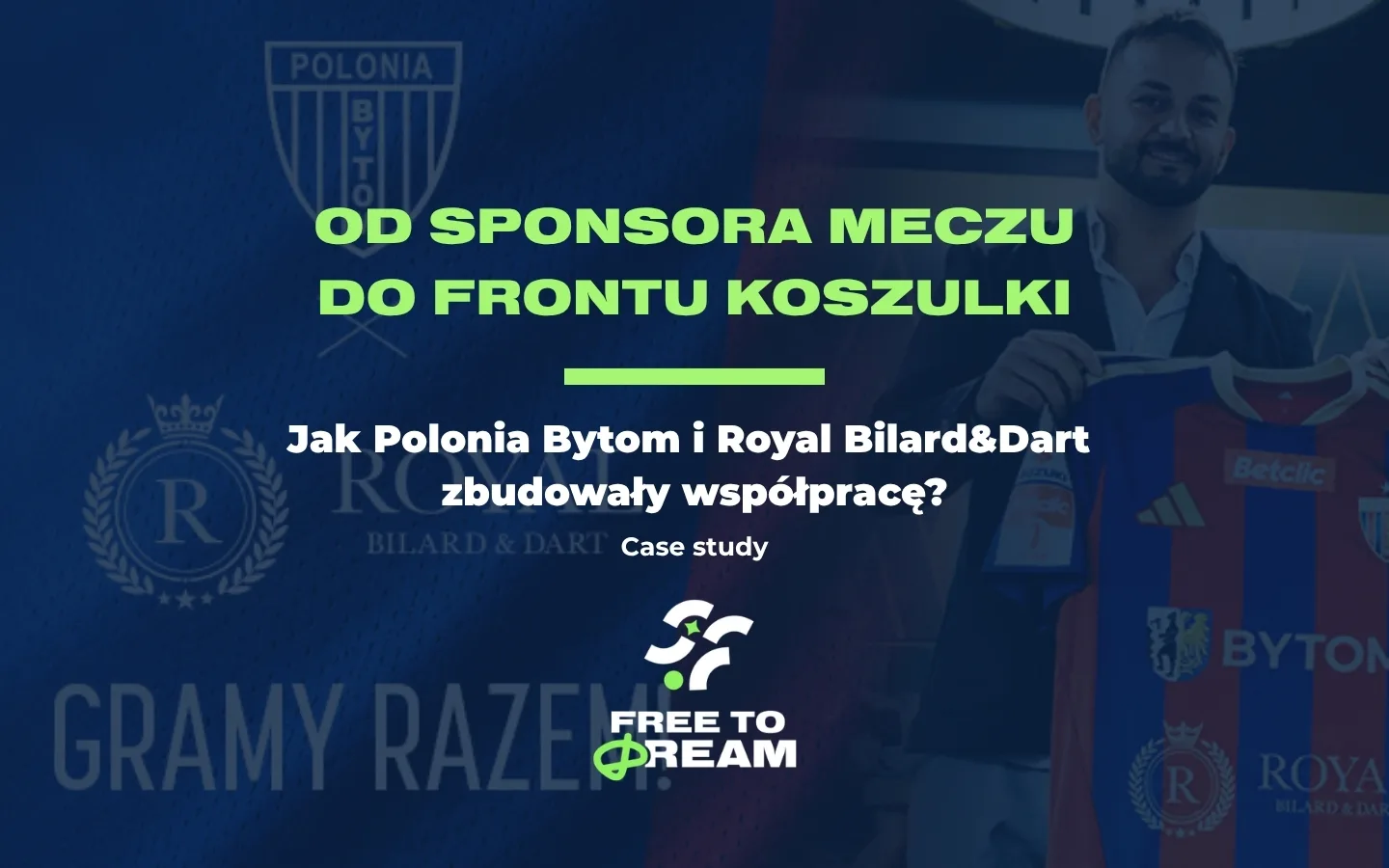
How do you build a relationship between a sports club and a sponsor? Get an inside look at the story of Polonia Bytom and Royal Bilard&Dart, which evolved from a one-time match sponsorship into a logo on the front of the first team’s jersey.

Many people overestimate the importance of motivation and underestimate the power of daily habits. Lasting change usually comes from small, regular actions rather than one-off bursts of effort.

A break from training doesn’t mean a break from development. Now is the time to work on the areas there is often no room for during the season.

Have an idea for a project but not sure how to fill in one of the sections? That’s NOT A PROBLEM!

A simple tool from a breathing coach to help you recover after training!

Looking for business support for your academy? Stop selling just the space on your shirts. Offer a local company a CSR project that solves real problems!

Discover the Free to Dream dietitian’s recipe for a homemade isotonic drink!

The assessment criteria are, in practice, the “instructions” experts use to score your project. If you write your application first and check the criteria afterwards, key elements are often missing.

Working from morning till night, yet the bank balance doesn’t show it. Is the problem really a lack of money in football, or a lack of control over it?

Your role is not to decide for your child or paint gloomy scenarios, but to open doors and show them what is possible. Pressure breeds resistance. Inspiration breeds curiosity.

Want to win over your local authorities, but it just isn’t working? Try a different approach!

Why do some clubs regularly attract business partners while others, at a similar sporting level, still rely only on parents’ fees and grants? Three changes in approach that make the difference.

Sleep is physical recovery, but it is also time for the nervous system to settle after the stress and emotions of a match. Here is a simple bedtime breathing technique.

Everything goes well in training, but in matches come the mistakes and the stress? Discover the psychological reasons behind children’s dips in form and learn how to help them.

Do you know what most often makes parents stay with an academy for longer? The relationship, and the sense that they are part of something bigger.

Public grants are one of the key sources of funding for sports clubs. Yet many organisations make the same mistake: they start writing the application before they have a well-thought-out project.

Football is one of the most physically and mentally demanding sports. To perform at your best on the pitch, training well is not enough – eating well matters just as much.

Wondering what to eat after training? Try this simple recipe from the Free to Dream dietitian!

All too often, choosing an academy comes down to the logo and “tradition”. But it isn’t the club itself that trains your child – a specific person does.

Your child trains regularly and gives their all, yet looks exhausted after barely fifteen minutes of a match? It may not be fitness – the cause often lies elsewhere.

Every stray pass, lost ball or wrong decision is a natural part of the game, not proof of weakness. What really matters is your reaction – and how quickly you get back into the game.

The first is “yesterday”: always looking back. The second is “tomorrow”: telling ourselves every day that we’ll start tomorrow. Both can keep us from living in the present.

Why do some football academies attract the best coaches and sponsors while others struggle with constant turnover? Here is how to build a mission, vision and values that set yours apart.

A key topic! The right “fuel” can be the difference between an all-out sprint in the 80th minute and running out of steam by half-time.

For a child, defeat is not just a “lost game” – it often brings big emotions. Our role as adults is not to shield children from every mistake, but to teach them to carry on with their heads held high.

Training four times a week, away matches, and on top of that a maths test and a set book to read by tomorrow…

A winning mentality in a 12-year-old: it’s more than just wanting to win! ⚽

For a young athlete, an injury is one of the hardest moments.

In today’s sport, talent is the foundation, but recognition and a professional image are what accelerate a career.

Scouting in youth football has gathered plenty of myths. Many parents dream of their child being “discovered” by a big club, but often don’t know what the process really looks like.

Today we see him with trophies, in the spotlight, as one of the best strikers in history.