
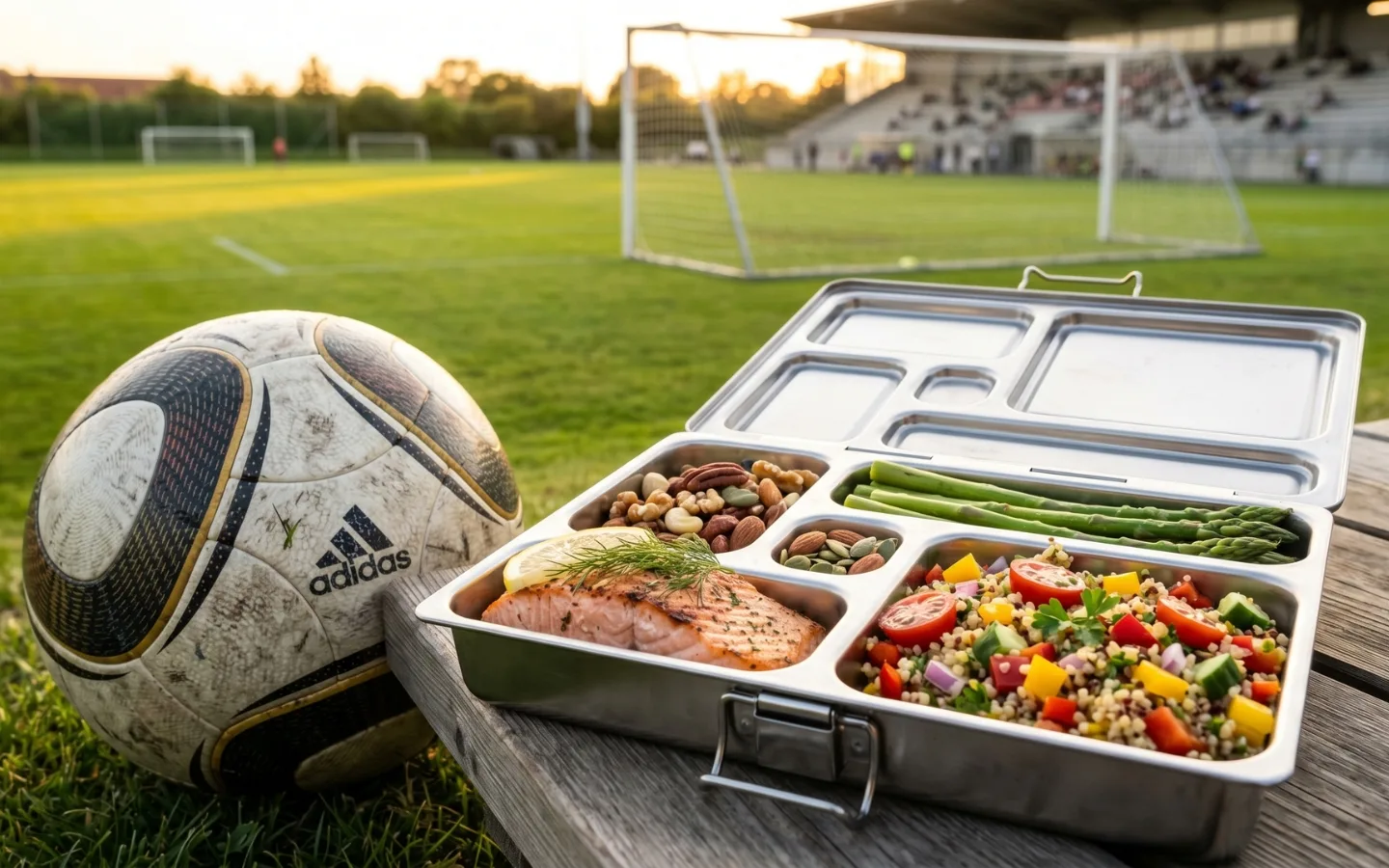
I thought for a long time about what the topic of this first article should be. In the end I decided it was worth starting with something a little more accessible and sketching out the background – the nutritional challenges athletes face every day and the real benefits of putting the right nutrition strategy in place.
Contrary to popular opinion, football is one of the most physically and mentally demanding sports. It combines endurance, strength, speed and cognitive skills. The modern game places ever higher demands on male and female players, demands that go well beyond physical, technical and tactical preparation. What matters most today is all-round development, and its foundation is proper nutrition. To achieve optimal results on the pitch, training well is not enough – eating well is just as important.
The rule is simple
If you want to train more and train better, you have to give your body more energy. Training is the stimulus for development, while it is your diet that supplies the “building material” from which sporting form is made. Otherwise it is very easy to overload the body, lose fitness and, as a result, end up overtrained and injured. Despite the huge amount of information available – which is not always matched by its quality – nutritional awareness among young athletes is still not good enough. And yet it is one of the most important elements of balanced development.
That is the main mission of this project – providing reliable nutrition knowledge grounded in science and experience. No marketing oversimplifications, no promotion of ineffective supplements or harmful diet trends that can hurt sporting performance. The aim is education that genuinely supports a player’s development.
Nutrition should not be treated as an add-on to training
It is an integral part of it – without it, reaching optimal sporting form is simply impossible. A well-balanced, personalised diet, matched to training loads, makes it possible to support a young athlete’s body effectively every single day. It helps maintain high energy levels in training and matches, speeds up recovery, reduces the risk of infection and injury, and keeps form stable over the longer term.
With young players we also need to remember that sport is only one part of their daily lives. School demands concentration and energy, which cannot be sustained without proper nutrition. A well-planned diet reduces tiredness and sleepiness, improves cognitive performance and makes it easier to function both on the pitch and in the classroom.
One of the biggest challenges in feeding young athletes is logistics
Not planning meals often leads to random food choices. If a player does not prepare food in advance and take it with them when leaving the house, they are very likely to grab something quick and easy. In those situations, highly processed snacks high in sugar and fat take over – and however tasty they are, they should not form the basis of an everyday diet.
The nature of football requires players to keep adapting to changing match situations. The team’s style, the tactical plan and a player’s position all affect the kind of effort involved. During a match a player makes dozens of sprints, changes of direction, jumps and physical challenges. Loads like these cause micro-damage to the muscles, which needs proper recovery.
A match itself burns a great deal of energy. Without the right nutritional preparation – both before and during the game – keeping up a high intensity for the full 90 minutes becomes extremely difficult. Future articles will look in detail at what a diet that supports sporting form should look like, so keep an eye out for them.
Nor can we forget the foundation of it all: health
It is health that makes intense physical activity possible in the first place. For children and teenagers, nutrition plays an even bigger role, because their bodies are in a phase of rapid growth and development. A young athlete is not only training but also building their bone structure, developing muscle mass and shaping their nervous system. Nutritional mistakes made at this stage can have long-term consequences, such as greater susceptibility to injury or physical potential that is never fully realised.
In practice, many young players make basic nutritional mistakes. Most often they stem from a lack of knowledge, poor organisation of the day or a lack of support from those closest to them. Yet introducing even simple healthy-eating principles can produce very clear results.
Parents play a huge role here, as they have the greatest influence on a child’s everyday eating habits. They decide which foods are available, plan and prepare meals, and organise the rhythm of the day. Their involvement is crucial in building the right habits.
The role of coaches and the whole football academy is just as important
Coaches, as figures of authority, have a real influence on young players’ awareness and choices. Working with a dietitian – and giving that dietitian proper credibility in the players’ eyes – can make nutrition education far more effective. Academies that focus on all-round development should build nutrition education into their coaching programmes.
It is worth remembering that the aim is not only to raise athletes, but above all to raise well-informed people. Good eating habits last a lifetime and translate into long-term health. They help people avoid problems such as being overweight, obesity and diet-related diseases.
Summary
Nutrition in football plays a key role in a young player’s development. It affects their physical capabilities, their ability to recover, their health and, ultimately, their results. It requires the involvement of many people: the player, parents, coaches and specialists. But the results you can achieve with a conscious approach to nutrition are definitely worth it.
In modern football coaching, development does not end on the pitch. It also includes the everyday food choices that, in the long run, can decide whether a player reaches the very top.
Frequently asked questions
Why is nutrition not just an add-on to training?
Because training is the stimulus for development, while diet supplies the building material from which sporting form is made. Without it, it is easy to overload the body, lose fitness and end up overtrained and injured.
What does a well-balanced diet give a young player?
High energy levels in training and matches, faster recovery, a lower risk of infection and injury, and stable form over the longer term. It also helps at school: it reduces tiredness and sleepiness and improves cognitive performance.
What is the biggest challenge in feeding young athletes?
Logistics. Not planning meals leads to random choices – if a player does not prepare food in advance and take it with them, they will usually reach for highly processed snacks high in sugar and fat.
Who is responsible for a young footballer’s eating habits?
Parents have the greatest influence, because they decide which foods are available, plan meals and organise the rhythm of the day. Coaches also matter as figures of authority, as do academies, which should build nutrition education into their coaching programmes.